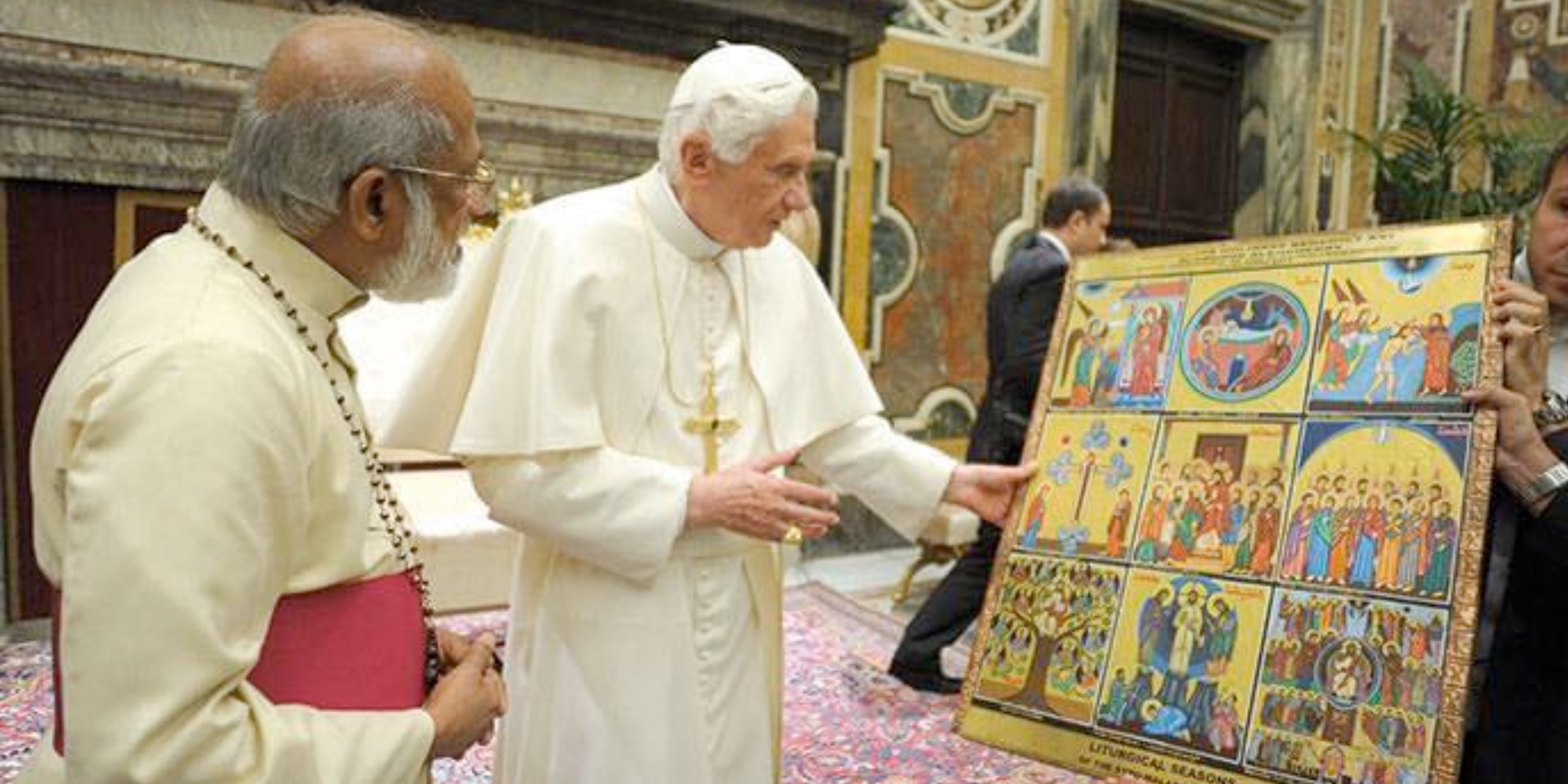
Seasons of the Church
Within the context of the Qurbana and Divine Praises, each liturgical season introduces specific psalms, hymns, and readings tied to key moments in salvation history: the angel’s annunciation to Mary, the birth of Christ, his baptism, his battle with the devil in the desert, his passion, death, resurrection, and ascension, the descent of the Holy Spirit, the preaching of the Apostles, the repentance of the nations, the victory of the cross and the final crowning of the Church in heavenly glory. Year after year, the Church invites us to be absorbed not only into our own lives and concerns, but more and more into the life of Christ, so that we can live with eyes open to a larger world, where God’s salvation is the focus. These aren’t abstract commemorations. They are invitations to reorder your time, attention, and affections around the events that define the Christian faith.
To properly live the spirituality of the liturgical seasons:
- We must know the spirit of the liturgical season.
- To understand the feasts and particular days of the season.
- To observe the pious activities of each liturgical season
Suvara
- Key Themes: The Mystery of Incarnation, The Old Testament History, Mary’s Submission with God, Message of Peace to Humankind (Angel’s Hymn)
- Key Dates: Christmas, Annunciation (2nd Sunday), Naming of Jesus (8th Day of Yalda), Mary the Mother of God (Last Friday of Suvara).
- Pious Activities: 25 day Fast, Commemoration of Mother Mary.
Denha
- Key Themes: Baptism - Revelation (and Birth) of Christ, Revelation of Trinitarian God, Public Ministry
- Key Dates: Denha, Fridays of Denha (Feast of Saints) - 1. Yohana Mamdana (Connection to the Old Testament, preparation for Christ), 2. Peter and Paul (Jews and Gentiles), 3. 4 Evangelists, 4. St Stephen, 5. Greek Church Fathers. 6. Syriac Church Fathers, 7. Saints of the Proper Churches, 8. All Souls (Ancestors: Those who revealed Christ to me - meditation on death as a means to repentance).
- Pious Activities: Rakkuli Perunnal, Pindi-Kuthi Perunnal, Visiting the Tombs, Bautha d’Nineveh (2 weeks before the Sawma Ramba)
Sawmba Ramba
- Key Themes: Repentance, Fasting, To turn back and lead a new life, 40 days of Fasting, Passion and Death
- Key Dates: Lazarus Saturday, Hasha Week - Palm Sunday, Pesaha Thursday, Hasha Friday
- Pious Activities: 50 days of fasting (Preparation for Qyamtha, Preparation of Catechumens), Commemoration of the Death of Christ, Pesaha Meal, Vigil following Hasha Friday, Lazarus Saturday (Kozhikotta)
Qyamtha
- Key Themes: Victory over Death, To Stand Upright, New Life, Meditation of our own Qyamtha
- Key Dates: Qyamtha, New Sunday (Sunday after Qyamtha), All Saints (Simon Bar Sab’e, Friday after Qyamtha, One who dies with Christ will be resurrected with Him), Ascension
- Pious Activities: Standing upright (no kneeling), 10 days of preparation for Pentecost
Sliha
- Key Themes: Gift of Ruha, Call to preach the Gospel, Inauguration of the Church
- Key Dates: Pentecost, Golden Friday (First Friday, First miracle of the Slihe - continuation of the Work of Isho through the Church), Last Friday (Commemoration of the 70 apostles)
- Pious Activities: Reading of the Acts, Meditate on our relation with successors of the Apostles.
Khaitha
- Key Themes: Growth of the Church, Pilgrim Church
- Key Dates: No Particular Feast Days, Fridays are devoted to the Martyrs and Apostles (1. Mar Jacob of Nisibis, 2. Mar Mari, 5. Shimoni and her Children)
- Pious Activities: Pilgrimages
Eliya-Sleeva-Muse
- Key Themes: Second Coming, Final Judgment, Victory of Sliva
- Key Dates: Feast of the Exaltation of the Sliva
- Pious Activities: Fast of Elijah (Monastic Practice, Elijah’s Encounter with God - Helps us to meet God)
Qudasha d’Edtha
- Key Themes: Christ dedicate His Bride to God the Father, Completion of the Incarnation (God became man so that man could become God)
- Key Dates: Feast of Dedication (First Sunday)
- Pious Activities:
Syro Malabar Litrugical Calendar
To add the Syro Malabar Liturgical Feast Days, Fasts and Readings to your Calendar App:
- Apple: Click This Link
- Google: Add https://cal.bookswithsyro.co.uk/calendar.ics to this page
- Alternative Application: Subscribe to https://cal.bookswithsyro.co.uk/calendar.ics and set refresh frequency to daily.
Alex George Shijan
Seminarian, Eparchy of Great Britain
Syro-Malabar Catholic Church